Exhibition date extended until January 31, 2027
Its composition and specific properties make borosilicate glass a material that can be used in several areas of production. Unlike conventional soda-lime-silica glass, it contains a high proportion of silicon dioxide and boron dioxide. These components mean it exhibits low thermal expansion, which results in high resistance to sudden temperature changes, making it ideal for the production of goods used to make hot meals and drinks, and for the dining table itself. The range includes bottles, teapots, decanters, mugs, glasses, jars, pots, and several types of baking dishes. Borosilicate glass is also chemically resistant, hard, and strong, and is outstanding in terms of optical clarity. Its combination of heat and chemical resistance also makes it ideal for the production of laboratory and technical glass, while its durability and lightness mean it is often used in light fittings. And the fact it is non-detrimental to health means it can be used in the food industry too. Signature products include design accessories and elements in architecture, gift items, and unique works of art.
Borosilicate glass was invented by German chemist Friedrich Otto Schott, who devoted himself to its development at the turn of the 1880s and 1890s in a laboratory in the German city of Jena, a laboratory that was the foundations of what is now SCHOTT AG. Several companies in the Czech Republic process borosilicate glass from tubes, rods, and profiles, but only KAVALIERGLASS, a.s. from Sázava is involved in production as such. In fact, it has been making special chemically- and heat-resistant laboratory glass since its foundation back in the 1830s. Production methods and glass batches were steadily enhanced to meet international trends and customer needs. The Sázava glassworks first launched borosilicate glass on the market in 1923, and development continued. SIAL Czech borosilicate glass (1951) and the improved SIMAX (1958) were progressively developed and put into production during the 1950s. And SIMAX is used by consumers in various forms to this very day.
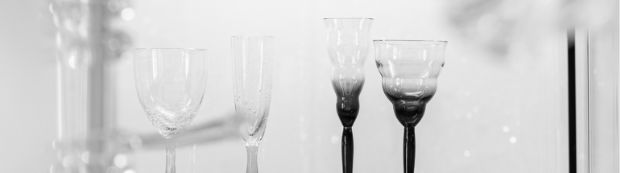
The Borosilicate Glass exhibition presents a representative insight into the contemporary production of four companies that, although having different histories, being of different sizes, and partly differing in terms of their focus of production, are linked by their passion for working with this unique material.
KAVALIERGLASS
www.kavalier.cz
KAVALIERGLASS, a.s. is one of the largest producers of borosilicate glass in the world. The company began in 1837 with the opening of the first Svatoprokopská glassworks in Sázava and is inextricably linked to the Kavalier family, after whom it takes its name. It now sells its products on the Czech market and abroad. The company’s range includes glass tubes, rods and capillaries, laboratory, technical, and industrial glass, including apparatus. Another important product is household glass, ranging from baking dishes and pots to jars, bowls, glasses, bottles, and iconic teapots with plastic lids for tea or coffee. The company sells its products under its own brands – SIMAX and KAVALIER. It also makes customized products on an individual basis.
DETESK
www.detesk.cz
Detesk’s roots were planted in 1990, when company founder Ivan Kalousek began making small gift items using borosilicate glass in his family home. In the years that followed, his business underwent explosive development – larger production facilities, more products made, and more employees. The company’s range includes various items made using borosilicate tubes, rods, or profiles: gift bottles, absinthe fountains, and related accessories, drink ware, utility, decorative, technical, and laboratory glassware. An increasing share of production is devoted to components for luminaires. The company also works with designers and artists, at the Summer Glassmaking Workshop, for example, organized by the Town Museum and the Secondary School of Glassmaking in Železný Brod. It exports a significant portion of its goods abroad, and significant efforts are being made to grow the brand. At present, Detesk owns three buildings in Železný Brod, holding its offices, glass production works, its own wood production to complement the range of glass, and a company shop adjoined to the museum.
TECHNOSKLO
www.technosklo.cz
Technosklo is one of the world’s leading producers of borosilicate technical and laboratory glass, also making products for healthcare and chandelier parts. Its wide range of goods in all these areas of production, containing more than 2,500 types of glass products, is accompanied by its own development base. Together with its high-quality technological facilities and experienced workforce, this means that the company is able to respond to the diverse needs of Technosklo customers from more than 80 countries around the world. Top priorities include the quality and safety of our goods, innovation, and continual advancements in streamlining production processes.
DT GLASS
www.dtglass.cz, www.darkove-sklo.com
DT GLASS was founded by Josef Moravec in 2003 and processes borosilicate glass. It mainly makes various designs of gift and decorative items, the production of which takes maximum advantage of the shaping possibilities which this specific type of glass provides. Products include vases, jars, candle holders, gift bottles, tumblers, mugs, wine thieves, ornaments, chandelier trimmings, and sports trophies. The range also includes luminaires, utility, technical, and industrial glass. DT GLASS makes products in line with its own designs, but at the same time satisfies the wishes and requirements of customers with its custom production and special projects. As well as processing borosilicate glass, the company has been working in upcycling for more than ten years now.

 15. 05. 2026 - 31. 01. 2027
 Museum
 plakát Trienále 2026 / poster Triennial 2026
.jpg)
.jpg)
.jpg)
.jpg)
.jpg)
.jpg)
.jpg)
.jpg)
.jpg)
.jpg)
.jpg)
.jpg)